When most of us think of coding agents, we think autocomplete on steroids:
“Fix this bug.”
“Implement this feature”
“Explain this error.”
Useful, sure. But that’s only scratching the surface.
The real power of coding agents like Claude Code isn’t just about writing code snippets. It’s about automating real work.
The Tool vs. Coworker Mindset
Most of us treat coding agents like fancy autocomplete tools. We think:
I need code → I ask the AI → I get code → Done
But what if that’s the wrong mental model entirely?
Claude Code isn’t just another autocomplete tool. Yes, it writes code but it also:
Uses file systems (reads configs, writes outputs)
Runs terminal commands (executes scripts, manages processes)
Integrates with external tools(databases, external services) via MCP
Maintains context across complex workflows
Can spawn specialized sub-agents for different tasks
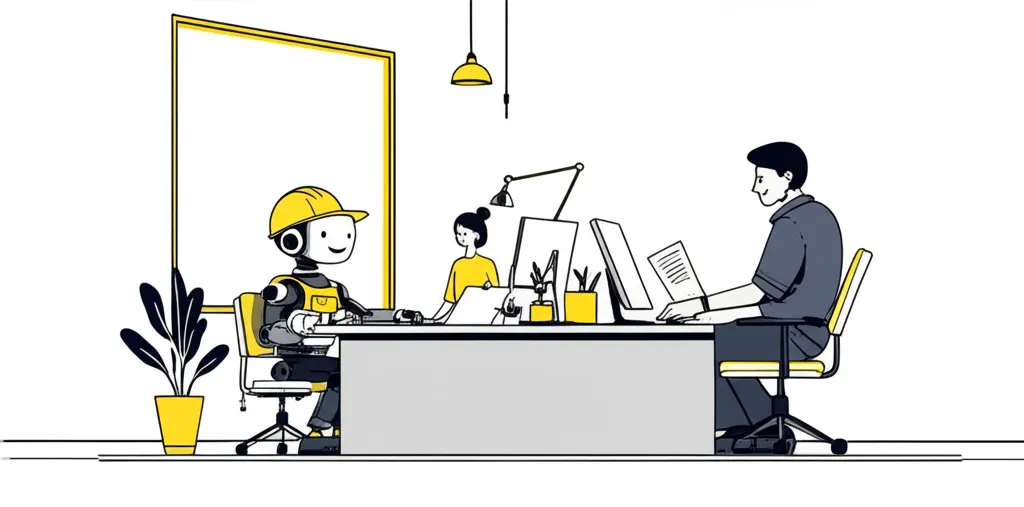
Put all that together, and you don’t have a coding agent. You have a junior coworker with a laptop.
And that changes everything about how we should use it.
Coworker mindset:
I have a business problem → I onboard my agent → We collaborate → The process runs end-to-end.
That’s what I tried recently with Claude Code, and it really changed how I think about AI agents.
A Real-World Example: Tax Law Automation
Let me show you what this looks like in practice with a real project I worked on recently.
The Challenge: We needed to keep our knowledge graph updated with changes to India’s Income Tax Act. Every day, the government publishes e-gazette notifications — think of it as a legal newspaper filled with regulatory updates.
The Manual Process:
Check e-gazette website daily
Download and parse legal PDFs
Identify actual tax law changes
Update Neo4j knowledge graph
Validate new relationships
Time investment: 2–3 hours of mind-numbing work every morning.
This is a classic knowledge worker task: it’s structured and repetitive, but still needs some domain understanding.
Instead of asking Claude Code to just “write me a scraper,” I onboarded it like a junior teammate. Together, we explored the site, corrected misconceptions, analyzed hundreds of past notifications, built domain models, and iterated until Claude could run the workflow end-to-end.
The result:
What once took 2–3 hours now takes 5 minutes to review.
But more importantly, I walked away with a repeatable framework for onboarding agents into new workflows.
The Collaborative Intelligence Process
Here’s how Claude Code and I tackled this together
Explore Together — investigate the problem space, don’t assume you know it all.
Correct Misconceptions — agents will get things wrong; teach them like you would a junior.
Build Understanding Incrementally — feed real examples, let patterns emerge.
Let It Design Its Own Tools — agents often create abstractions better suited to their reasoning than ours.
Document & Iterate — capture learnings into prompts, workflows, and tools for reuse.
This isn’t prompt engineering. It’s apprenticeship.
The End Result
After this collaborative process, I had:
A comprehensive system prompt that captured all our domain knowledge
Custom tools that Claude Code built for its own workflow optimization
An end-to-end process that could handle any type of notification
But more importantly, I had a reusable framework for training Claude Code on other knowledge work processes.
Beyond Tax Law: The Broader Pattern
Once you see it, the pattern applies everywhere.
It’s always the same triad: structured reasoning + tool interaction + domain knowledge.
The Future of Knowledge Work
I believe we’re at an inflection point. The technology exists today to automate not just manual tasks, but work itself.
Coding agents like Claude Code aren’t here just to help us code better. They’re here to help us work better.
Think about it:
Compliance teams shouldn’t waste hours filing forms.
Analysts shouldn’t manually track competitor movements.
QA shouldn’t be reduced to clicking buttons endlessly.
Agents like Claude Code can handle these repetitive, structured, yet complex tasks. That frees humans to move up the value chain — from execution to strategy, from grunt work to innovation.
This is the future I want to help build:
Small teams leveraging AI coworkers to scale like large organizations.
Knowledge processes are captured, automated, and continuously improving.
Agents are trained not with clever prompts, but with collaboration and apprenticeship.
Wrapping Up
The takeaway is simple: coding agents aren’t just for code.
When we onboard them like teammates — exploring together, correcting mistakes, building incrementally, they don’t just generate snippets. They learn to own entire workflows.
This isn’t about replacing developers or analysts. It’s about scaling our capacity for work. By pushing repetitive processes down to coding agents, we free humans to focus on strategy, creativity, and innovation.
The next era of software isn’t just code and APIs.
It’s collaborating with digital coworkers.